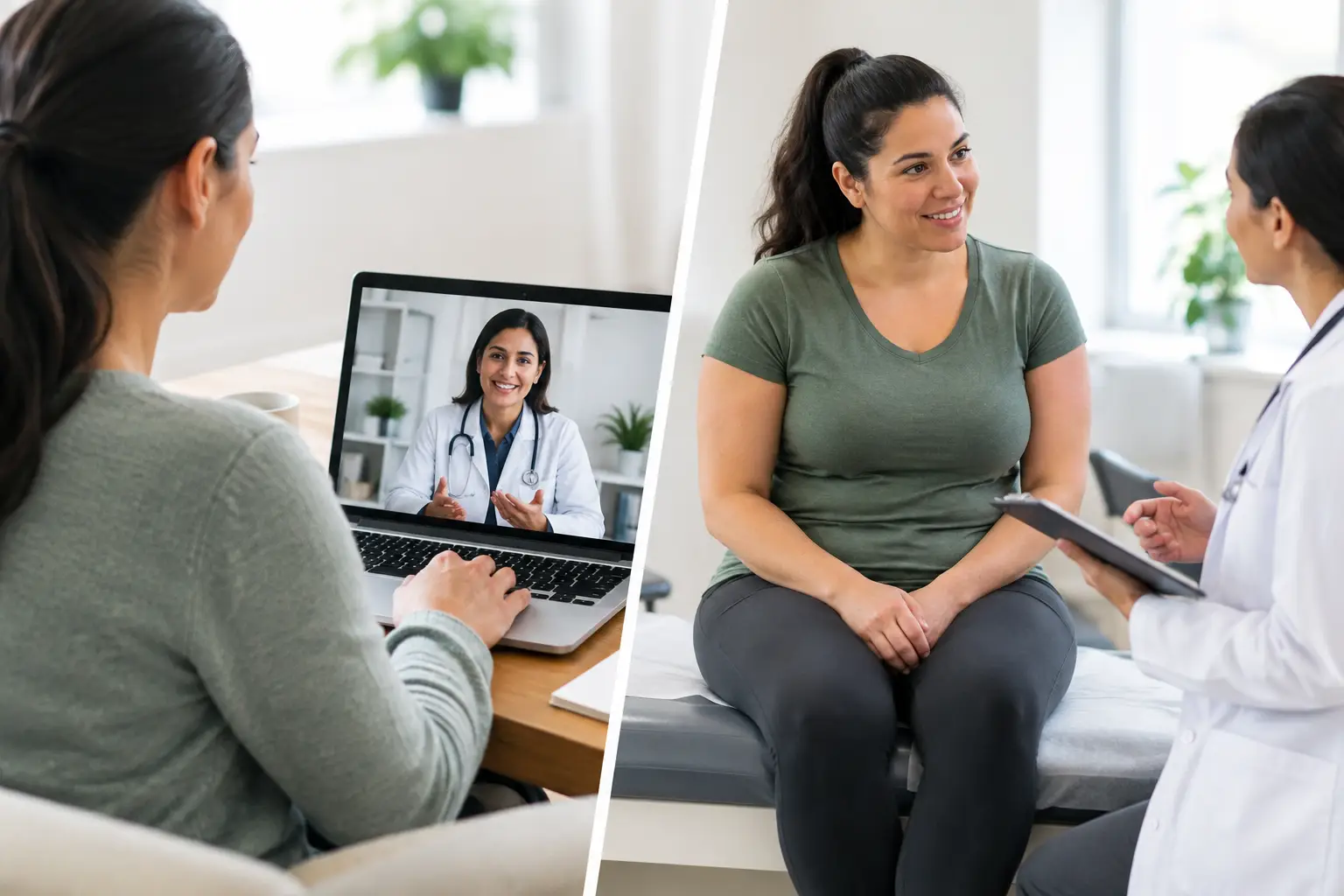
A weight loss appointment should not require rearranging your workday, sitting in a waiting room, or explaining why you need time off. When comparing virtual care vs office visits, the better option is the one that gives you appropriate medical support without creating another obstacle between you and care.
For many adults dealing with persistent hunger, cravings, or constant food thoughts, virtual care offers a practical path to medically supervised weight loss. But telehealth is not automatically right for every person or every health concern. The key is knowing what each model can do well - and when an in-person evaluation matters.
Virtual Care vs Office Visits: What Changes?
The clinical goal is the same: understand your health history, evaluate whether treatment is appropriate, monitor progress, and adjust your plan as needed. The difference is how you access that care.
With an office visit, you travel to a clinic for appointments, weigh-ins, consultations, and follow-up. That can be reassuring if you prefer face-to-face conversations or need a physical exam. It can also mean scheduling around traffic, childcare, seasonal crowds in Naples, or a packed work calendar.
With virtual care, you meet with a licensed medical provider remotely using a secure telehealth platform. You can discuss your symptoms, medical history, weight goals, side effects, and treatment response from home or another private location. Required lab work, when appropriate, can still be ordered and reviewed as part of your care.
Virtual appointments are not less serious simply because they happen through a screen. Quality telehealth involves clinical screening, medication review, ongoing follow-up, and clear guidance about when an in-person visit is needed.
Why Virtual Care Works Well for Medical Weight Loss
Weight loss is rarely a one-appointment issue. The most useful care happens over time, as your provider learns how your appetite, energy, eating patterns, health history, and medication response fit together.
That is where telehealth can be especially helpful. A short follow-up from home may be much easier to keep than a clinic appointment across town. Consistent check-ins give you a regular opportunity to discuss whether you are feeling fuller sooner, whether food noise is becoming quieter, and whether nausea, constipation, or other side effects need attention.
For people considering GLP-1 treatment, convenience can make a meaningful difference in staying connected to care. These medications may support appetite regulation and help reduce intrusive food thoughts for eligible patients, but they still require medical oversight. Your provider needs to know how you are tolerating treatment, whether your dose should change, and whether the plan continues to fit your health needs.
Virtual care also offers privacy. You do not have to discuss a deeply personal struggle with food and weight in a crowded lobby. You can have a direct, focused medical conversation in a setting where you feel more comfortable.
The benefit is not just saving a drive
The strongest reason to choose telehealth is not that it is easy. It is that it can make ongoing medical support more realistic.
Many people have spent years trying to force themselves through restrictive plans, starting over every Monday, and thinking about food all day long. When hunger and cravings feel louder than your intentions, more willpower is not always the answer. A medically supervised approach can help address the biological side of appetite while giving you a practical structure for long-term progress.
At Eliminate the Food Noise in Your Head, telehealth weight management is designed to remove unnecessary friction. Monthly medical weight loss programs start at $149 for medication, with no membership fees layered on top simply to stay enrolled. The focus stays where it belongs: clear medical guidance and a plan you can actually keep up with.
When Office Visits May Be the Better Choice
Virtual care has limits, and a credible weight loss program should be honest about them. Some health situations require hands-on assessment, testing, or a relationship with an in-person clinician.
An office visit may be a better fit if you have symptoms that need a physical exam, such as severe abdominal pain, chest pain, shortness of breath, fainting, persistent vomiting, or signs of dehydration. Those concerns should not be handled as a routine telehealth follow-up.
In-person care can also be useful if your medical history is complex, your vital signs are uncontrolled, or your provider believes an examination is necessary before making treatment decisions. Some patients simply feel more confident meeting face-to-face, especially at the beginning. That preference matters too.
Telehealth and office-based care do not have to compete. A thoughtful virtual provider can coordinate with your primary care clinician, recommend lab testing, and tell you clearly when an in-person evaluation should come next. Good care is not about insisting that everything happen online. It is about using the right level of care at the right time.
Safety Depends on the Care Model, Not the Location
The question is not whether virtual care is safe in the abstract. The better question is whether the program is medically supervised and built around your individual health profile.
Before prescribing any medication, a provider should review relevant medical history, current medications, allergies, prior weight loss efforts, and contraindications. Certain GLP-1 medications may not be appropriate for people with specific personal or family medical histories, during pregnancy, or alongside certain conditions and treatments. Eligibility is determined by a qualified clinician, not by an online quiz alone.
Ongoing follow-up matters just as much. Your provider should ask about side effects, hydration, nutrition, bowel changes, appetite, and changes in your overall health. They should give you instructions for reaching out if something feels wrong and advise you when urgent or emergency care is necessary.
Be cautious with any weight loss offer that promises medication without a real medical evaluation, guarantees a certain number of pounds lost, or makes it difficult to reach a clinician. Fast access is valuable. Skipping medical judgment is not.
Cost and Convenience: Look Beyond the Appointment Price
Office visits can involve more than the listed appointment fee. There may be transportation costs, parking, time away from work, and repeated travel for follow-ups. For a busy parent, professional, or retiree managing multiple commitments, those hidden costs can turn a good intention into a missed appointment.
Virtual care reduces much of that burden. You can often attend a follow-up without leaving home, which makes it easier to stay engaged between milestones. Transparent monthly pricing also helps you understand what you are committing to before you begin.
Still, ask what is included. Treatment costs can vary depending on the medication prescribed, insurance coverage, lab requirements, pharmacy pricing, and your individual plan. Straight answers are more valuable than a low headline number with unexpected fees later.
Choosing the Right Option for You
If you are generally able to communicate by video, can complete recommended labs, and do not need an immediate physical exam, virtual medical weight loss care may offer the support you need with far less disruption. It is especially appealing when your biggest barrier has been finding time for consistent care.
If you have new or concerning symptoms, need hands-on evaluation, or simply want an in-person relationship with your clinician, office visits may be the right place to start. Your health should guide the format, not convenience alone.
The right program should make you feel heard, not rushed or sold to. Whether your care happens through a screen or in an exam room, you deserve clinical guidance that takes your health seriously and helps quiet the constant food thoughts that have been taking up too much space in your life.