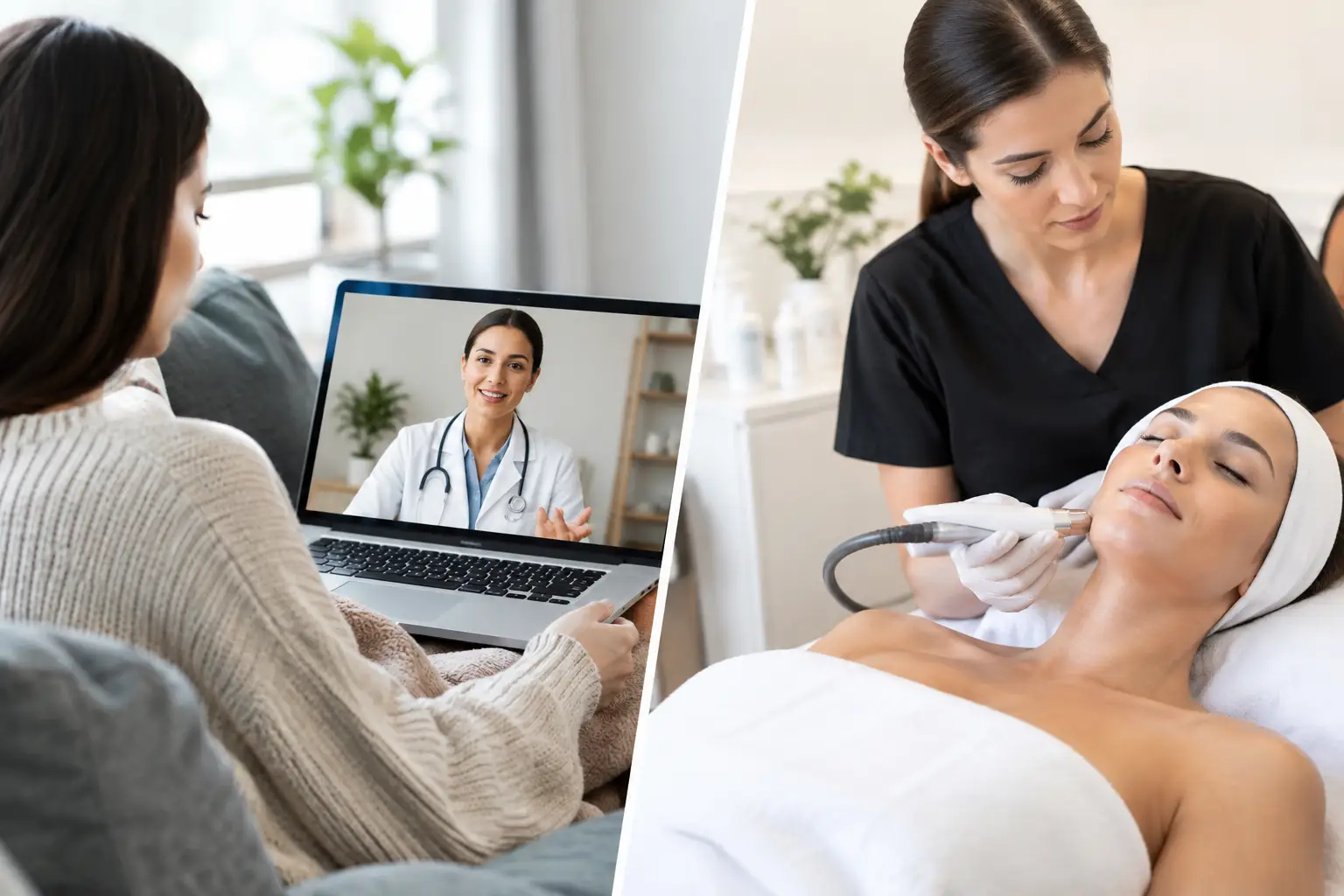
Constant thoughts about food can make weight loss feel like a full-time job. When you are comparing telehealth care versus med spas, the real question is not which option sounds more appealing. It is which setting gives you safe, appropriate medical support while making care realistic enough to continue.
For many adults in Naples and across the United States, GLP-1 treatment has changed the conversation. The goal is not simply to eat less through willpower. It is to address appetite regulation, reduce persistent hunger, and quiet the constant food thoughts that can make every day feel exhausting. Both telehealth providers and med spas may offer weight-loss services, but the experience, medical structure, and ongoing support can be very different.
Telehealth Care Versus Med Spas: The Core Difference
Telehealth medical weight-loss care is designed around clinical evaluation and ongoing medical decision-making delivered remotely. You meet with a qualified healthcare professional by video or phone, review your health history, discuss goals, and determine whether a treatment plan, including GLP-1 medication when appropriate, makes sense for you.
A med spa is typically an in-person wellness and aesthetics business. Some med spas offer medical weight-loss programs and may work with licensed clinicians. Others focus more heavily on cosmetic services, wellness treatments, or retail products alongside injections. That does not automatically make a med spa unsafe or ineffective. It does mean you should look carefully at who is directing your care, how decisions are made, and what happens after the first appointment.
The setting matters because weight management is not one-size-fits-all. Your medical history, current medications, side effects, lab needs, and response to treatment deserve more than a quick transaction.
What Telehealth Weight-Loss Care Can Offer
Telehealth removes a common barrier: getting medical care without rearranging your life around another appointment. Busy professionals, parents, caregivers, and retirees can speak with a provider from home, work, or another private location. There is no waiting room, commute, or need to schedule a clinic visit around traffic and errands.
That convenience is meaningful when care requires follow-up. GLP-1 treatment often involves gradual dose adjustments, monitoring how you feel, reviewing progress, and addressing questions about nausea, appetite changes, hydration, or nutrition. Remote care can make those check-ins easier to keep.
Care focused on more than the scale
A good telehealth program should not treat weight as a character flaw or assume that every patient needs the same dose, meal plan, or timeline. It should start with an honest conversation about your health and your lived experience.
For people dealing with food noise, that experience can include thinking about the next meal all day, feeling pulled toward snacks even when physically full, or repeatedly starting over after diets become impossible to maintain. Medically supervised treatment may help reduce those intrusive thoughts for eligible patients, but medication works best as part of a plan that considers eating patterns, activity, sleep, and long-term health.
Clear access can support consistency
The best care plan is not helpful if it is too difficult to access. Telehealth lets patients maintain contact with their healthcare team without turning every follow-up into a half-day event. It also offers privacy for people who do not want to discuss weight concerns in a crowded office or a public-facing wellness setting.
At Eliminate the Food Noise in Your Head, monthly medical weight-loss care starts at $149 for medication, without added membership fees. Transparent pricing does not replace a clinical evaluation, but it can remove uncertainty and help people understand what they are committing to before they begin.
Where Med Spas May Fit - and Where to Look Closer
Some people prefer a med spa because they value face-to-face care. They may want an in-person weigh-in, enjoy a local wellness environment, or already visit the spa for other services. A med spa with an experienced medical provider, clear protocols, and thoughtful follow-up may be a reasonable option for certain patients.
Still, the atmosphere should not be the deciding factor. A polished lobby, social-media promotion, or same-day injection offer does not tell you whether the program is medically appropriate for your needs. Weight-loss medication is healthcare, not a beauty add-on.
Before choosing a med spa, ask whether a licensed prescribing clinician completes the evaluation, whether your full medical history is reviewed, and how side effects or medication concerns are handled between visits. You should also understand exactly what you are paying for. Some programs charge initiation fees, recurring memberships, separate visit fees, medication fees, or add-ons that are not obvious at first glance.
In-person care can be valuable, especially if you need a physical assessment or simply feel more comfortable meeting locally. But frequent office requirements can also create friction. If you are likely to skip follow-ups because of travel, work, family obligations, or seasonal life in Southwest Florida, a telehealth model may better support your consistency.
How to Compare Your Options
When weighing telehealth care versus med spas, focus less on the label and more on the quality of the care process. Four questions can make the decision clearer:
- Who evaluates and prescribes for me, and what are their qualifications?
- How are side effects, dose changes, and follow-up questions managed?
- What is included in the monthly price, and are there membership or administrative fees?
- Does this format make it easy for me to stay engaged over time?
You should also ask about medication sourcing, pharmacy processes, eligibility requirements, and what happens if the treatment is not a fit. A reputable provider will be direct about limitations. Not everyone qualifies for GLP-1 medication, and these medications are not right for every medical history.
Be cautious about promises of dramatic results without discussing risks, monitoring, nutrition, or follow-up. Sustainable progress rarely comes from a single injection or a short burst of motivation. It comes from care that is responsive when your body, schedule, or needs change.
When Telehealth May Be the Better Choice
Telehealth may be a strong fit if you want medically supervised care with less disruption to your routine. It can be especially useful if the thought of making repeated in-person appointments has kept you from getting help before.
It may also suit you if you value straightforward communication over a spa-style experience. You may not need a treatment room, weekly weigh-in, or cosmetic-service menu. You may need a qualified provider, a clear plan, convenient follow-up, and a chance to stop spending so much mental energy negotiating with hunger.
That said, telehealth is not the right answer for every situation. Some patients need in-person examination, local testing, or care coordination that is best handled face to face. If you have urgent symptoms or a medical emergency, telehealth weight-loss care is not a replacement for immediate medical attention.
Choose Care That Respects Your Real Life
The right program should feel medically sound and manageable, not confusing, rushed, or built around pressure. Whether you choose remote care or an in-person provider, look for clinical oversight, transparent costs, and follow-up that treats you like a person rather than a number.
You deserve support that helps make food take up less space in your mind - and leaves more room for your life.